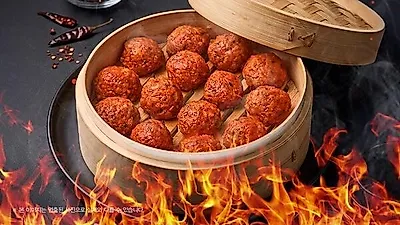
Harim's 'Food Road' tour offers a premium look at food production
Harim Group opens its massive First Kitchen and FBH fulfillment centers to the public, showcasing premium manufacturing and air-chilling technology.
[Field Report] "No Compromise on Premium"... Visiting Harim's 'Food Road' to taste with all five senses
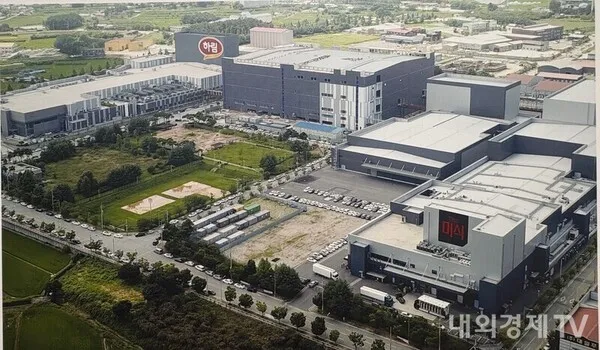
As the massive steel doors open, the friction sounds of advanced equipment spinning incessantly are met with a sudden rush of hot steam from freshly cooked rice. This is Harim Industry's 'First Kitchen' in Iksan, Jeonbuk, boasting a scale of 36,500 pyeong. While it features cleanroom facilities as strict as a semiconductor plant, the savory aroma spreading through the 100-degree steam makes it feel exactly like a mother's kitchen. The overwhelming scent of 'home-cooked meals' that erupts in contrast to the cold mechanical sounds instantly makes visitors' mouths water.
◆ From Kitchen to Logistics at a Glance... 'Kitchen & Chicken Road' Awakening the Five Senses
On the 17th, Harim Group held the Harim Food Road Tour in Iksan, Jeonbuk, revealing its food manufacturing and logistics infrastructure to the public. The tour consisted of 'Kitchen Road,' which tours the First Kitchen manufacturing plant of Harim Industry, and 'Chicken Road,' which explores Harim's fulfillment facility, FBH (Fulfillment By Harim).
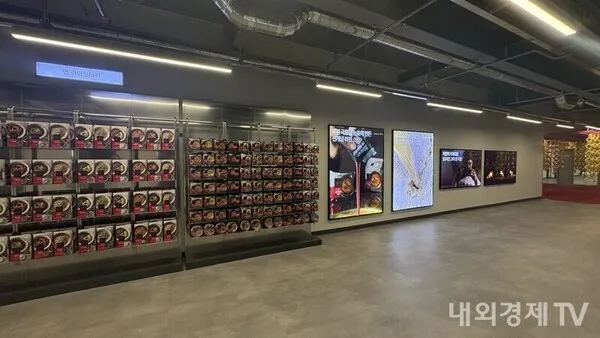
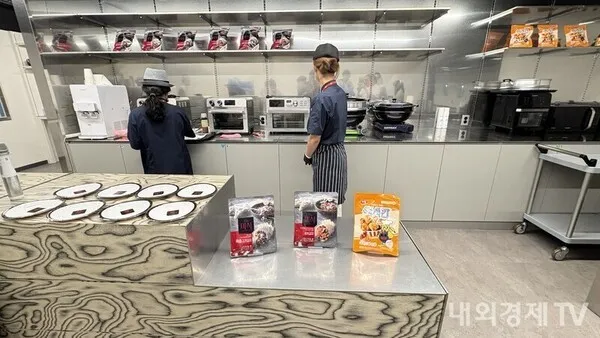
The Harim 'The Misik' lineup is displayed at the Food Road tour site. (Photo=NBNTV)
Harim Industry First Kitchen process line. (Photo=NBNTV)
(Photo=NBNTV)
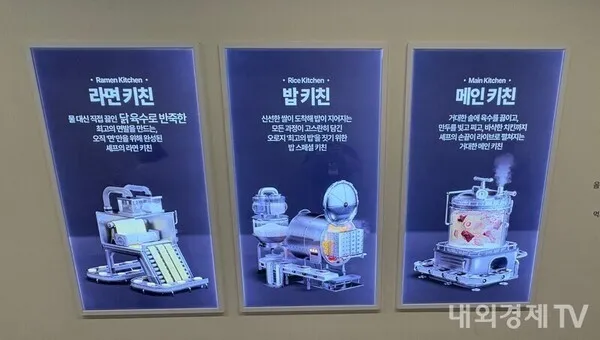
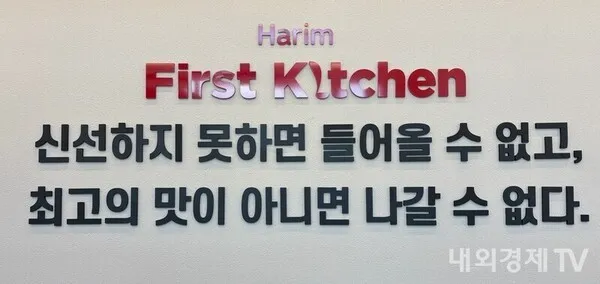
Harim Industry First Kitchen slogan. (Photo=NBNTV)
Completed in 2021, Harim Industry's First Kitchen is a large-scale production facility covering approximately 123,400㎡ (about 36,500 pyeong), built with an investment of about 520 billion won. The facility is divided into three main areas: ▲ Main Kitchen (K1), which produces seasoned foods such as soups, stews, and sauces; ▲ Rice Kitchen (K2), which produces instant rice like white rice, oats, and brown rice; and ▲ Ramen Kitchen (K3), which produces dried noodles and fried noodles.
Harim FBH is Korea's largest integrated chicken processing center, concentrating the entire chicken production process in one place, from the holding area to air-chilling, meat processing, part-meat processing, logistics, and wastewater treatment.
◆ "Best Ingredients for the Best Taste"... Harim's Premium Ramen with No Cost Compromise
The morning program began with a visit to First Kitchen. The tour proceeded from K3 to K1 so that visitors could observe the manufacturing process in reverse order, starting from product packaging.
At the K3 site, visitors could see the detailed manufacturing processes for the dried and fried noodles used in Harim's ramen and meal noodles. As a latecomer to the ramen market, Harim challenged the premium ramen market by launching 'The Misik Jangin Ramen' in October 2021. In the food industry, it is common to compete on price through loss leaders to rival established players, but Harim is sticking to a premium strategy without compromising on costs.
Harim uses a concentrated liquid soup made by simmering chicken, bone broth, and vegetables for 20 hours. The manufacturing cost of this liquid soup is approximately 800 to 1,500 won, which is up to eight times higher than typical powder soups (100 to 200 won). The reason Harim strengthens its premium lineup using liquid soup, despite the cost burden, is rooted in its strict food philosophy: "If it is not the best ingredient, it cannot enter the factory."
◆ Zero Additives, 100-Degree Clean Steam... Instant Rice Perfectly Replicating 'Home-Cooked Meals'
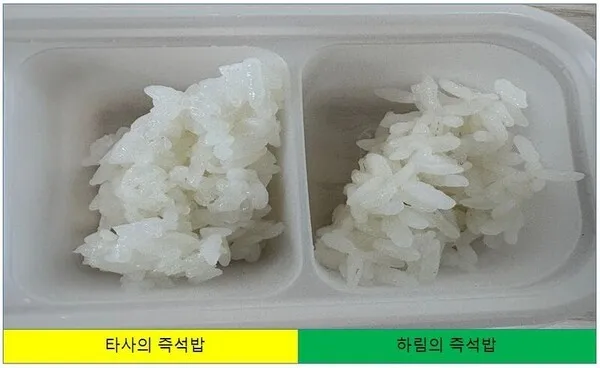
"Harim's instant rice has implemented a delicate method that considers not only the taste but also the condition of the rice grains to achieve a state closest to a home-cooked meal."
Compared to other companies' instant rice, Harim's instant rice shows less crushing of the rice grains. (Photo=NBNTV)
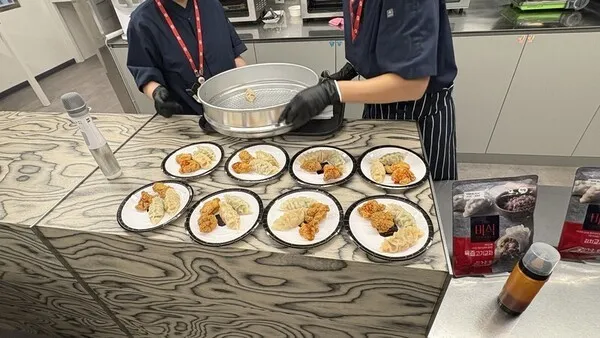
Preparing Man Do and boneless chicken tasting in the tasting area provided during the tour. (Photo=NBNTV)
Preparing Man Do and boneless chicken tasting in the tasting area provided during the tour. (Photo=NBNTV)
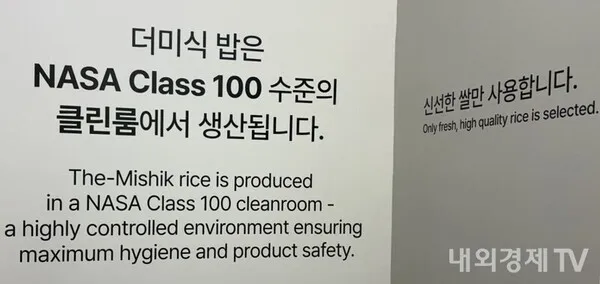
Upon entering the K2 site, the strictly controlled manufacturing environment caught the eye. The instant rice production process is a core area that demonstrates how much effort Harim puts into replacing home-cooked meals.
Harim's instant rice contains only rice and water. It does not include any preservative additives such as acidity regulators or rice bran extracts. To enable long-term storage without additives, the entire process is maintained in a cleanroom at the level of a semiconductor plant, fundamentally blocking the influx of bacteria from the moment water is added to the rice.
Furthermore, instead of the typical pressure tank cooking method that uses hot water for heating, they adopted a method of steaming with high-temperature clean steam of over 100 degrees. This prevents the phenomenon where rice grains are crushed due to packaging shrinkage and preserves the fluffy texture unique to freshly cooked rice. In blind tests conducted on-site, participants easily identified Harim's instant rice, which maintained its perfect grain shape.
The K1 site was a place where advanced technology and the aroma of a home kitchen coexisted. Producing soups and main side dishes, this area achieves clean flavors using natural seasoning ingredients. In particular, the Man Do, made using fresh refrigerated meat and vegetables prepared on-site within 12 hours, received a great response at the tasting corner.
◆ Reducing Stress and Increasing Freshness... The Secret of a 'Chicken Master,' Air-Chilling
In the afternoon, the tour continued to the FBH site, which has a total floor area of 64,157㎡ (about 19,407 pyeong). Harim has established a one-way fulfillment infrastructure that connects everything from slaughtering to meat processing, packaging, and logistics, completing a system that delivers products in the freshest state possible.
The most notable processes were 'gas stunning' and 'air-chilling.' Instead of the electric shock method commonly used to stun chickens, Harim uses gas stunning. This method cleanly drains residual blood from the capillaries, increasing the freshness of the meat and preventing spoilage.
During the cooling process, where the meat temperature is lowered to 2°C after slaughter, they insist on the air-chilling method—using cold air—instead of water-chilling, which involves submerging the meat in water. Air-chilling prevents the chicken from absorbing moisture and losing flavor, and it also prevents cross-contamination with other chickens. Although it takes more time and costs more, as the meat must travel along a rail for up to 200 minutes over a 7km stretch, it is a choice made for ultimate quality.
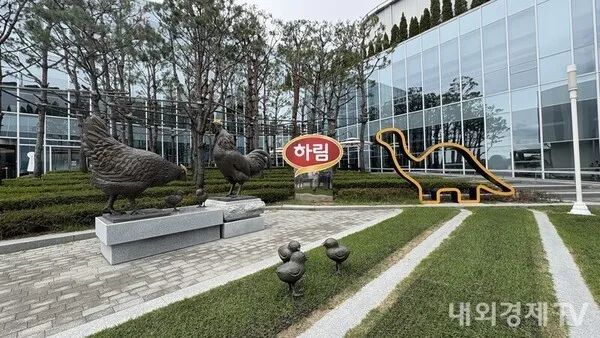
◆ Transparent Processes Build 'Trust'... Food Culture Content That Enthralled 130,000 People
While the food industry typically avoids disclosing manufacturing facilities, Harim has invested 170 billion won to build a tour program and is transparently revealing the entire process.
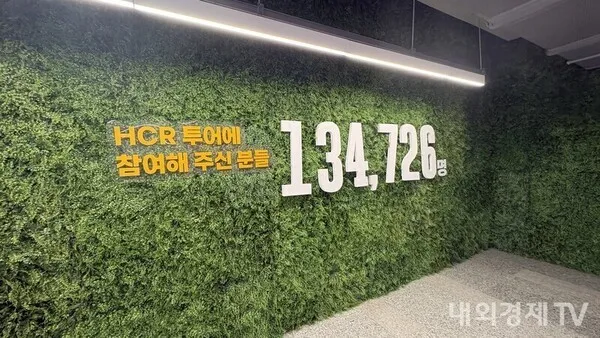
The response has been intense. The Food Road Tour, which runs an average of six times on weekdays and three times on Saturdays, has established itself as a cultural phenomenon, recording 134,726 cumulative visitors as of the 14th of this month. The photo zones and tasting corners located throughout the facility are especially popular with families.
A Harim Group official stated, "By transparently revealing the manufacturing process, we provide a fun experience for children and build food trust for parents."",
Related articles