Colosseum Corporation targets consumer tastes with new logistics model
Colosseum Corporation successfully hosted ICUcon in Tokyo, bridging K-pop idol fandom with logistics to help Korean brands expand into Japan.
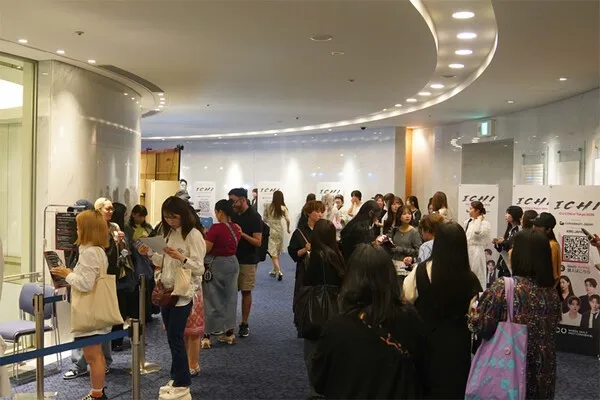
Approximately 800 local visitors attended ICUcon in Tokyo. / Photo=Colosseum Corporation
| NBNTV = Jeong Dong-jin | How far will the transformation of Colosseum Corporation, known for its AI-integrated logistics solution Colo AI, go?
According to Colosseum Corporation on the 14th, the company has completed ICUcon in Tokyo, Japan—an idol commerce event titled ICUcon in Tokyo-ICHI (hereinafter referred to as ICUcon).
ICU (Idol Commerce Universe) is a project promoted by Colosseum and KBS Japan to establish a K-culture business model in Japan by integrating content IP with logistics and spatial infrastructure.
ICUcon is the first offline event to implement this on the ground. It was designed to combine online and offline commerce with K-pop idol concerts, ensuring that the product experiences of local consumers are converted into actual purchases. Through this, domestic brands struggling to secure their own overseas distribution networks and execute local marketing can simultaneously verify local consumer reactions and sales potential.
The recent ICUcon was held for two days from the 11th to the 12th at the Dai-ichi Seimei Hall in Tokyo, attracting approximately 800 local visitors. Attendees were able to experience and purchase various products through brand storytelling delivered directly by K-pop idols.
Fifteen domestic brands from beauty, health functional food, IP character, and fashion sectors participated in the event, including Deweycel, Mayreve, Avajar, and Mermong. Additionally, Wonder Girls' Yubin, f(x)'s Luna, Block B's U-KWON, Supernova's Sungje, and Kenta (formerly of JBJ) appeared to introduce and demonstrate products from the matched brands at the booths.
Furthermore, products from the participating brands were sold on Qoo10, a leading Japanese cross-border e-commerce platform, and live commerce was conducted with local influencers. This supported the connection between offline experiences and online purchases, allowing participating brands to gauge the response and product demand in the Japanese market.
Colosseum linked the local marketing and sales of participating brands with logistics at ICUcon. For brands with future plans to expand their local business, the company plans to expand support for sales, distribution, and logistics.
Additionally, the company intends to design logistics centers and delivery structures tailored to each brand's business scale and sales method, and propose fulfillment solutions that consider the burden of logistics costs to support continuous overseas business expansion.
Yu In-hyeong, CEO of Colosseum Japan, stated, "This event is the first case of supporting the overseas expansion of small and medium-sized enterprises by combining K-pop idol fandom with online/offline commerce and logistics. We will expand our idol commerce crew pool to 60 members to widen the export routes for more K-brands and support the expansion of global sales."
Related articles