
The hidden mechanics of cryptocurrency exchange deposit confirmations
Explore how crypto exchanges manage deposit confirmations and why 'reorg' risks make security more important than speed for asset protection.
[Special Feature] The hidden mechanics of cryptocurrency exchange deposit confirmations
Bithumb / Data = NBNTV
| NBNTV = Reporter Jeong Dong-jin | On the 16th, SPX6900 was listed on Upbit and Bithumb. Prior to this, Coinone listed it on January 8. While this is a typical entry of an altcoin into the domestic exchange market, a hidden competition for deposit confirmations among exchanges lies beneath the surface.
Deposit confirmation refers to the process where an exchange, upon listing a new coin or project, specifies the starting price and the processing (success, completion) of deposits based on the minimum deposit quantity. Consequently, even when using the same networks such as Ethereum (ETH) or Solana (SOL), deposit processing varies from exchange to exchange because deposit confirmations differ.
According to Upbit and Bithumb on the 17th, the number of deposit confirmations for SPX6900 varies: ▲ Upbit 36 ▲ Bithumb 33 ▲ Coinone 65. If interpreted literally, this is a method that takes the number of times a user can confirm a deposit after being assigned a separate wallet address for SPX6900 deposits from an external source and adds the network's block generation time.
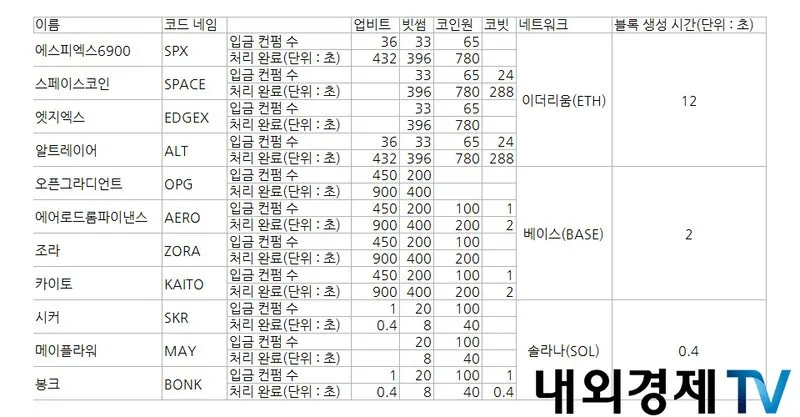
Deposit confirmations and theoretical processing completion times for Ethereum, Base, and Solana-based projects / Data = Each company, Compiled = NBNTV
As another example, the number of deposit confirmations for Spacecoin (SPACE) is ▲ Bithumb 33 ▲ Coinone 65 ▲ Korbit 24. Since SPX6900 and Spacecoin are Ethereum-based tokens, the time is calculated as 'Deposit Confirmation Count x 12 seconds' based on the Ethereum block generation time (one block generated every 12 seconds).
As a result, the theoretical deposit completion time for SPX6900 on Upbit is 36 x 12 seconds = 432 seconds (7 minutes 12 seconds), Bithumb is 396 seconds (6 minutes 36 seconds), and Coinone is 780 seconds (13 minutes). However, these are merely theoretical figures; actual deposit processing differs by exchange.
This raises a question. Some might think that faster is better and slower is frustrating. The variable in deposit confirmation is the network bottleneck that occurs simultaneously with a listing. Industry insiders state that when a temporary surge occurs, it takes time to process deposits, and the time required to confirm this inevitably varies by exchange.
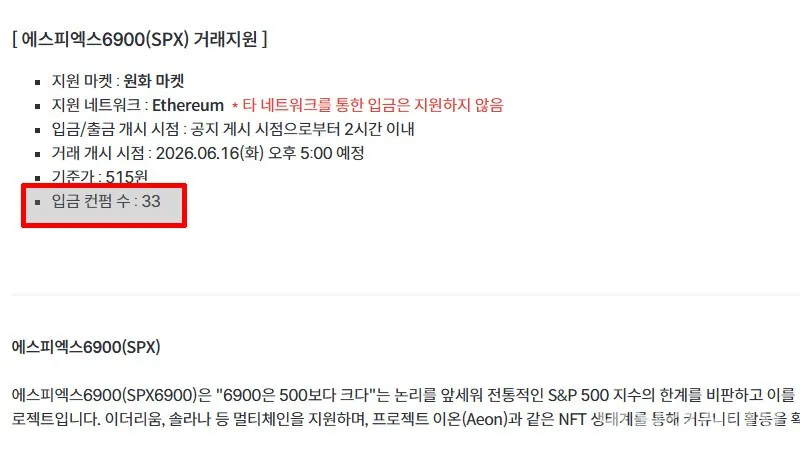
Bithumb indicated a deposit confirmation count of 33 when announcing the listing of SPX6900. / Data = Bithumb
A Bithumb official explained, "Even if a blockchain transaction occurs, there are cases where it is not reflected on the chain depending on network conditions such as consensus algorithms, so we notify customers as a guide based on our company standards. Since deposit confirmation means reflecting the deposit after passing through a sufficient number of confirmations according to each exchange's judgment, it is an area that can vary by exchange."
In other words, deposit confirmation belongs to the technical domain of the exchange, and unlike the concepts of fast or slow, it is closer to security, according to another industry insider. This is the process of leaving a record of a completed transfer from FROM to TO, which can be verified in blockchain explorers, scanners, and scopes, as a block generation number.
Some counter-argue that when a single token based on the same network is listed on four exchanges simultaneously, they prefer the exchange with a smaller deposit confirmation count, suggesting that a smaller number is advantageous in terms of convenience since a larger number results in delayed processing.
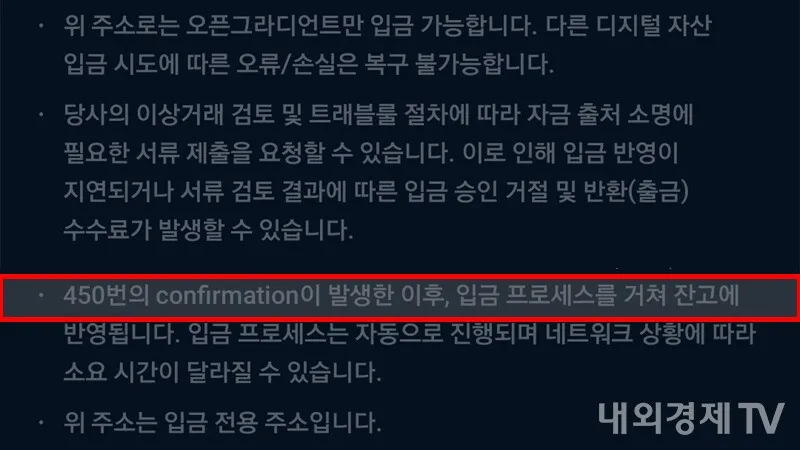
Upbit indicates a confirmation count of 450 for the Base-based Aerodrome Finance (AERO) deposit process. / Data = Upbit
However, the exchange industry emphasizes that this is not an area where they compete for superiority in speed and security based simply on numbers. As mentioned earlier, common Tier 1–3 projects like Ethereum and Solana all have different block generation times.
Certain projects build their own mainnets, resulting in a deposit confirmation count of 1, which is nearly real-time, while others may have a larger deposit confirmation count due to shorter block generation times.
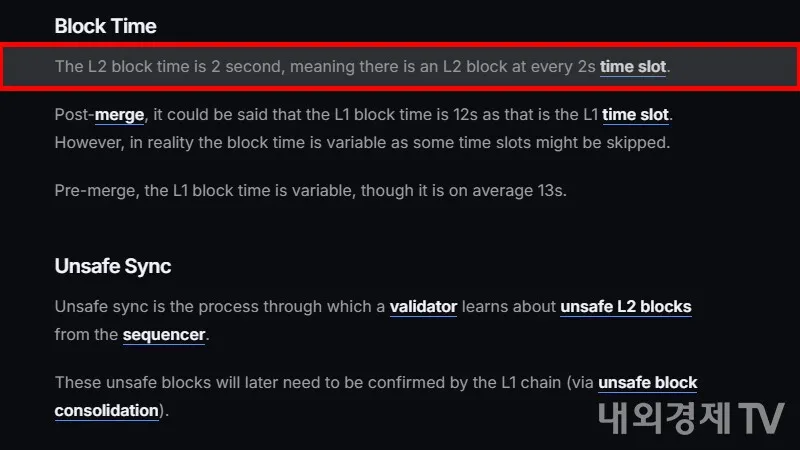
A representative example is tokens based on Base. Base is designed based on Optimism (OP), and its block generation time is 2 seconds. Therefore, it follows the formula 'Deposit Confirmation Count x 2 seconds.'
Aerodrome Finance (AERO), which is listed on four domestic exchanges as a Base-based token, has: ▲ Upbit 450 ▲ Bithumb 200 ▲ Coinone 100 ▲ Korbit 1. Theoretically, Korbit completes the deposit in 2 seconds, and Upbit processes it after 15 minutes (450 x 2 = 900 seconds), but the reality is not so.
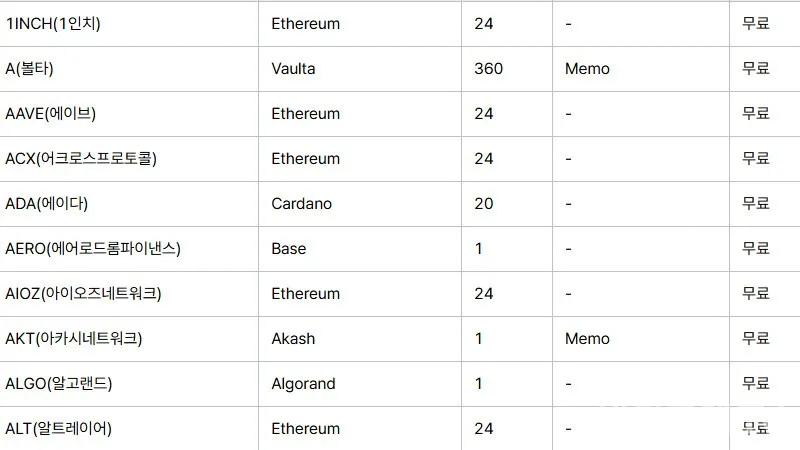
Part of Korbit's deposit and withdrawal network information / Data = Korbit
A Korbit official explained, "During deposit confirmation, we reflect the deposit after passing through a sufficient number of confirmations according to each exchange's judgment. Bitcoin can also experience reorgs, and this applies to other blockchains as well. We reflect deposits once the possibility of a reorg or deposit cancellation is sufficiently removed (through sufficient confirmation counts), and all exchanges display these confirmation counts."
The 'reorg' described by Korbit is formally known as Chain Reorganization.
To put it simply, it is a decisive and fatal attack used when bad actors attempt to identify and select fake transactions to attack relatively vulnerable external ecosystems, such as cross-bridges or DEXs.
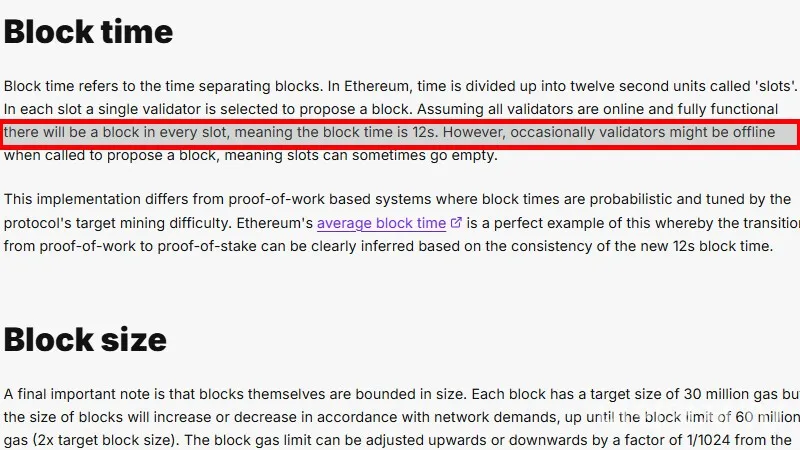
Because these attacks act like bait—leaving traces while draining all assets—domestic and international exchanges like Upbit and Bithumb adjust their deposit confirmation counts to block reorgs, essentially building a defensive wall to protect their assets.
A peculiar trend was observed while examining DAXA member companies regarding the topic of deposit confirmations. While Upbit and Coinone provide information on supported networks when listing new projects, they do not include deposit confirmation counts in their notices. In contrast, Bithumb and Korbit provide 'deposit confirmation counts' in their notices and deposit information pages.
An Upbit official stated, "Since the deposit confirmation process varies depending on the network, we indicate the confirmation count at the bottom when selecting a deposit network."
Another notable point is that each exchange has a set number of deposit confirmations. For Upbit, the deposit confirmation counts for Ethereum, Base, and Solana-based network tokens are the same. For an Ethereum-based token like SPX6900, the count is 36; for a Base-based Kaito (KAITO), it is 450; and for Solana-based Seeker (SKR) and Bonk (BONK), it is 1.
For Bithumb, the counts are ▲ Altlayer (ALT) 33 ▲ Kaito (KAITO) 200 ▲ Bonk (BONK) 20. For Coinone, they are ▲ Altlayer (ALT) 65 ▲ Kaito (KAITO) 100 ▲ Bonk (BONK) 1.
In essence, each exchange maintains fixed deposit confirmations for specific deposit/withdrawal networks. Rather than providing an exact time of completion, they handle it as a matter of internal expertise or confidential protocol, such as 'processed within approximately 1 minute.'
An anonymous exchange official emphasized, "Since deposit confirmation is directly linked to transaction support, it is an unwritten rule not to mention it outside of official notices."
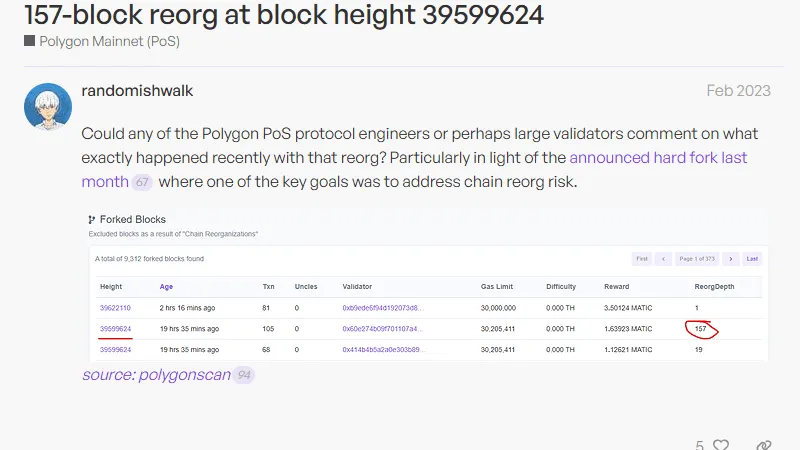
A reorg is not just a theoretical event. For example, the Polygon ecosystem token (POL) experienced a '157-block reorg' in February 2023, which was discussed on official forums. There are conflicting opinions that it was a simple bug, while others rumor it was a move to facilitate the Indore hard fork five months later.

While it was clearly an upgrade to improve Polygon's functionality, traces of those who proposed the 157-block reorg and its solution remain on X. Uniswap founder Hayden Adams mentioned the Polygon 157-block reorg issue, which was acknowledged by Polygon co-founder Jayant Kanodia.
This leads to a final question. If Polygon experienced a 157-block reorg, are other Layer 2 projects or altcoins immune to such issues? Furthermore, if KRW-based stablecoins are designed based on specific networks rather than their own mainnets, will they be able to respond to reorg risks?
For blockchain, a reorg is not a mistake, but an inevitability.
Special Thanks To
Upbit, Bithumb, Coinone, Korbit PR



Comments 0