
“Why are you so weak?” is the worst thing to say, says psychiatrist
Psychiatrist Kim Ji-yong discusses mental health trends, medication misconceptions, and how to truly comfort those suffering from depression.
A psychiatrist calmly reflects on the pain his patients face in the clinic and the professional weight he carries. Appearing on the tvN variety program 'You Quiz on the Block,' psychiatrist Kim Ji-yong spoke about shifts in mental health trends following the COVID-19 pandemic, common misconceptions regarding mental illness, and the best ways to offer comfort to patients.
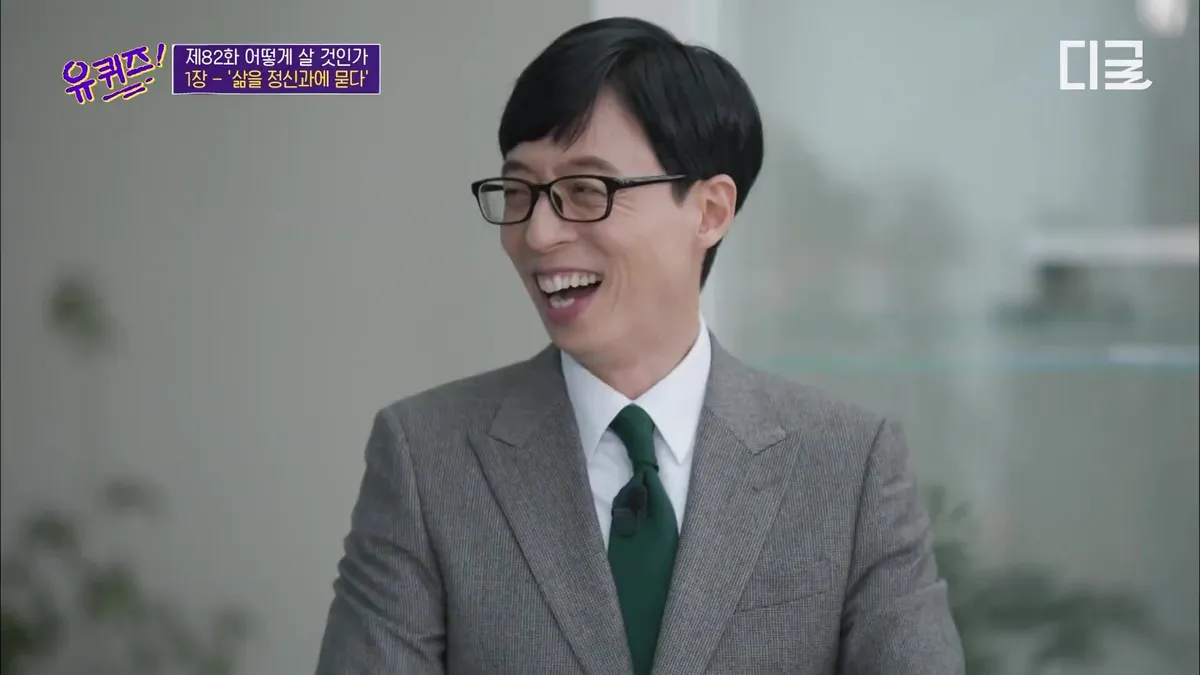
“Why are you so weak?” is the most hurtful thing to say to a patient
Kim revealed that during the COVID-19 pandemic, psychiatric patient numbers were the only ones to increase, unlike other medical departments. This was due to restricted outdoor activities leading to decreased exercise and sunlight exposure, alongside irregular eating habits that caused hormonal imbalances. Kim noted that many patients are particularly anxious due to uncertainty about the future.
He compared the difference between feeling depressed and having clinical depression to 'rain.' While the feelings of depression anyone can experience are like common rain, clinical depression is entirely different in depth and duration; it changes one's very perspective of the world, much like how it feels as if it has been raining every single day for two consecutive weeks. In particular, Kim pointed out that among the words spoken to patients, “Why are you so weak?” is the worst thing to say. He explained that those in the depths of depression tend to view themselves negatively, and if those around them point out their weakness, they become convinced of their own inadequacies and fall into even deeper thought spirals.
Regarding this, Kim emphasized that rather than providing a perfect solution as an expert, it is more important than anything to deliver the message: "I am behind you. You can contact me whenever things are difficult." The feeling that someone is thinking of them provides great strength to patients.
Misconceptions about psychiatric medication and the reality of schizophrenia and bipolar disorder
Discussion continued regarding concerns about dependency on psychiatric medication. Addressing the social stigma that does not view psychiatric medication with the same lack of prejudice as internal medicine or orthopedic medication, Kim replied, "We take them too," stating that medical professionals can also take medication when necessary. He added that it is not uncommon for patients to hesitate from treatment due to a resistance to medication, or for family members to confiscate it.
Specific explanations of illnesses also followed. Mentioning cases of schizophrenia where patients suffer from auditory hallucinations and delusions, he explained that the hallucinations experienced by patients are not something that can simply be ignored. Furthermore, he noted that while many misunderstand severe mood swings as simply bipolar disorder, in an actual manic state, a person becomes a completely different individual—sleeping less, being overflowing with energy, and even mistakenly perceiving themselves as a great being.
“Life is something that is decided and flows by chance”
Kim also honestly confessed the professional hardships he faces as a psychiatrist. He mentioned that psychiatrists are among the professions with high suicide rates, stating that the moment of losing a patient is the most difficult. Unlike other departments where diagnoses can be made with numerical data, the nature of psychiatric treatment requires the doctor themselves to be the diagnostic tool, meaning the sense of helplessness and responsibility felt when a patient is lost is immense.
Finally, he defined life as "something that is decided and flows by chance." He delivered the message that the pain experienced by those visiting the clinic is mostly not their own fault, and even if they struggle due to unexpected situations like COVID-19, life is something that eventually unravels and flows again as time passes.


Comments 0