
How to avoid giving pocket money to relatives: Step-by-step tactics
YouTube channel BDNS shares humorous, strategic ways to dodge the financial burden of giving holiday pocket money to nephews and nieces.
As families gather for the holiday season, specific strategies have emerged to reduce the financial burden of giving pocket money to relatives. The YouTube channel BDNS suggested in its video description that the best approach is to avoid creating situations where one has to give money at all, quoting Sun Tzu's Art of War: "The best tactic is to win without fighting during Chuseok."
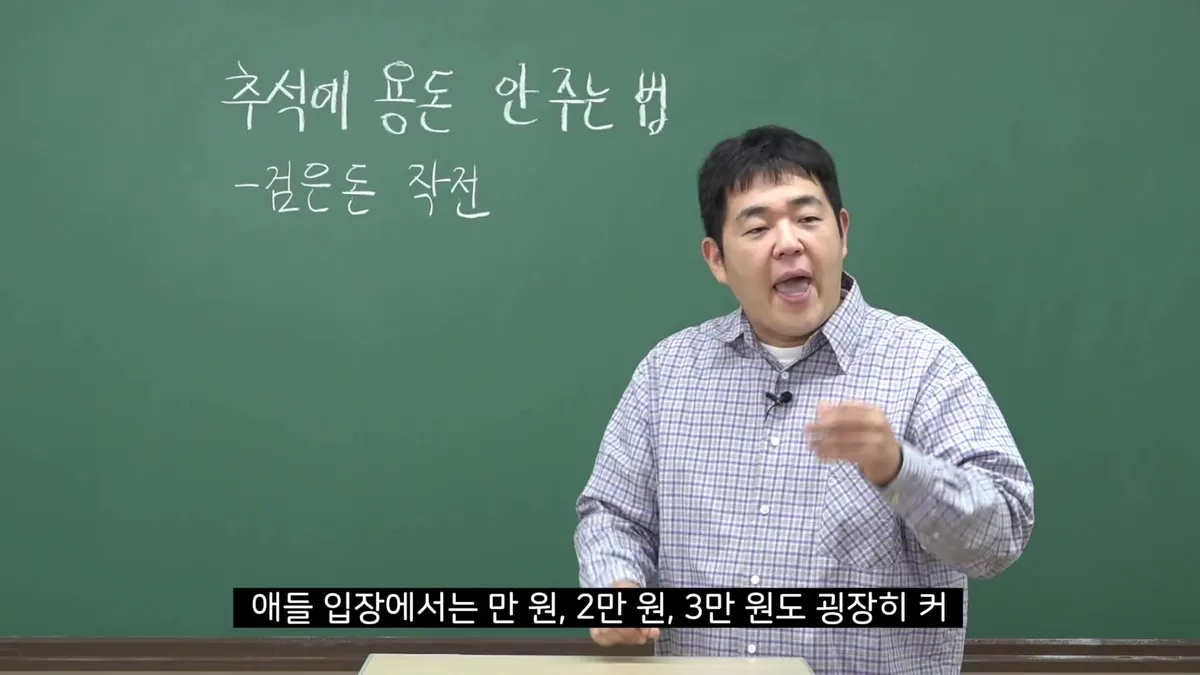
Elementary schoolers: 'Secret pocket money'; Middle schoolers: 'Games and competition'
The video outlines step-by-step tactics for handling pocket money based on the age of the nephew or niece. For elementary school students, the video noted that money given in front of adults is likely to be handed over to their parents. To counter this, it suggested calling the child aside to give them a small amount secretly, while emphasizing they should not tell their parents. Additionally, it recommended "bluffing" parents by claiming an appropriate amount has already been provided to defend against further demands.
For middle schoolers, the video pointed out that giving money secretly behind parents' backs is ineffective. Instead, it proposed a "game" method that leverages the competitive spirit among children. By gathering multiple nephews and nieces to play a game and distributing a large prize to the winner while giving small amounts to the rest, overall spending can be reduced. The key, the video explained, is to divert the children's attention through the fun of the game.
High schoolers: 'Door slamming' and 'emergency escape' strategies
Even more aggressive countermeasures were presented for those with high school-aged relatives. Using the example of students preparing for exams like the Suneung, the video mentioned a "door slamming" strategy to create an atmosphere where visits are discouraged entirely. This involves using the student's studies as a pretext to induce them to refrain from holiday visits.
An "emergency escape" strategy was also included for cases where a visit cannot be prevented. Suggested methods include leaving the scene by citing traffic congestion during peak travel times after a meal, or evading the situation by suddenly complaining of physical discomfort during the meal. The video added that as a last resort when all other methods fail, the most certain way to avoid high-expense periods—such as 6th grade, 3rd grade of middle school, or university entrance—is to avoid the holiday visit altogether by citing illnesses like enteritis.


Comments 0