Missing the thrill of staying up all night for games
An in-depth look at why gamers are losing interest in the K-game market despite massive development budgets and high-quality graphics.
[Special Feature] Missing the thrill of staying up all night for games (1)

| NBNTV = Reporter Joo Hyun-woong | I was a gamer, and I will remain one. From spending nights in PC bangs with cup noodles to rushing to a PC bang on annual leave only to face critical server maintenance, I never let go of gaming. But lately, something feels strange.
The passion that once burned through the night to become a legendary server leader has begun to cool due to auto-play features and constant reinforcement mechanics. The days of being truly dedicated to a game, such as being part of the Banwang or Seonghyeol guilds in Lineage, have vanished.
While massive new titles pour out almost every day, gamers' fingertips seem to have lost their destination. In the K-game market, which is covered in tens of billions of won in development costs and beautiful graphics, why do users wander through Google Play, the App Store, and even Steam for a few minutes only to lonely turn off their screens?
For many gamers, it has become a routine to scroll through the App Store's new releases on the way home from work or on weekend evenings, only to bitterly close their phones, saying, "There really are no games to play these days."
Looking at new titles plastered with descriptions like "stunning graphics" and "tens of billions of won blockbuster," one is first struck by a bitter feeling: "Is the entire K-game market collapsing?"
In the past, even if a game was criticized with comments like "the combat feel is good, but the gameplay is lacking," people would recall memories of saying, "If you move servers, I'll carry you up to the max level," because they needed friends to play with. However, while memories are beautified, reality flows in a different direction from a gamer's emotions.

It is not that the domestic game market itself is collapsing.
According to the "2025 Korea Content Promotion Agency Game White Paper," the domestic game industry's revenue in 2024 was 23.8515 trillion won, an increase of 3.9% compared to the previous year. Mobile games accounted for 14.071 trillion won, making up 59.0% of total revenue, and PC games also recorded a scale of 6.094 trillion won.
Massive amounts of capital are still moving in the market, and users who invest time and money into games remain strong. Ultimately, looking only at the market scale, it is difficult to conclude that "gamers have disappeared" or "they don't spend money."
While the market is expanding to its largest size in history, the reality felt by gamers on the ground is completely different. Despite the constant influx of new titles every year, the paradoxical feeling of "there are no games to play" repeats among users.
The problem is not the quantity of new titles, but how many of the numerous options are attractive enough for users to willingly invest their time and money again. Although they present new IPs, characters, and worldviews, once a player starts the game, a uniform process unfolds: following the main quest to grow the character and matching equipment for reinforcement.
Once a certain level is reached, daily/weekly dungeons and repetitive content open up, followed by packages, battle passes, and probability-based items designed to supplement lacking growth resources—a sequence that is already transparent to gamers. From the game company's perspective, it is clearly a "new title" worked on for years, but from the user's perspective, it is merely a repetition of the Fade In they have experienced countless times in other games.
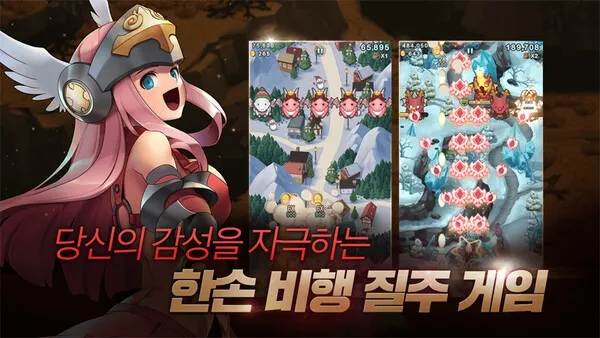
A planning team leader at a mid-sized game company, who requested anonymity, said, "Even within the development team, we want to make new attempts, but to pass the planning stage or internal business feasibility reviews, we have no choice but to maintain the growth framework and BM structures that have already been proven to users. This is why, no matter how much we refine the worldview, direction, and graphics, users feel disillusioned and leave after playing for just a few hours, saying, 'It's all the same anyway.'"
When considering the case of a user who enjoyed Game A for several years, the problem becomes even clearer.
The user spent immense time and significant costs to nurture their character and equip gear. They ran dungeons every day and performed daily/weekly content like homework to continue competing, but eventually left the game due to the fatigue of constant growth demands and monetization pressure.
If, after that, Game B is released with a new worldview and advanced graphics, and the user starts it with high expectations only to find themselves again matching equipment, reinforcing, and doing daily homework just a few hours later, the reason to continue playing disappears.
At this point, the question the user asks is simple and intuitive: "The reason I quit Game A remains exactly the same, so why should I start Game B?" It is the same old story, over and over again.
When similar experiences repeat two or three times, by the time Game C is released, users skip the process of even installing the game to check it out. In the past, paying for a new game was a way to purchase a fresh experience, but after experiencing service terminations or disillusionment through multiple games, users have become extremely cautious with their next consumption.
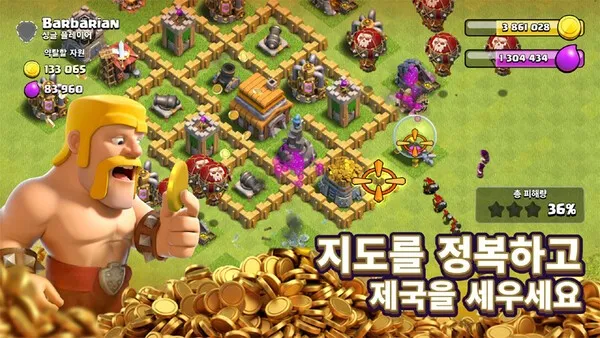
Another industry insider lamented, "What marketing teams fear most is not the users expressing dissatisfaction in official communities, but the indifferent users who leave without even a reaction. As more users turn to short-form or video content rather than enduring the fatigue of learning and adapting to a new game system, the efficiency of large-scale new title marketing has dropped significantly compared to the past.""
While game companies repeat the BM (business models) that were successful in the past, users have also perfectly learned and mastered how to deal with those systems.
Furthermore, a game company's competition is no longer just other game companies. In the past, a user who quit Game A would move to Game B, but now, there is an abundance of alternative content that provides instant gratification, such as YouTube, OTT, webtoons, and short-form videos.
Because of this, what game companies should truly fear is not the users criticizing operations or expressing dissatisfaction in communities.
The real danger is the growing number of "indifferent users" who show no anticipation for new titles and quietly turn away from Google Play or the Apple App Store without installing anything.
To be continued in Part 2...
Related articles