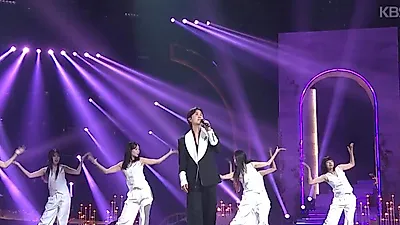
Min Jun-Jung and Casper Sian analyze Bailey's choreography on SDF
Cast members Min Jun-Jung and Casper Sian discuss the structural design and dreamy mood of Bailey's performance on Mnet's 'SDF'.
Following the release of Baillie's performance on the fifth episode of Mnet's 'SDF', a new video has surfaced featuring cast members Min Jun-Jung and Casper Sian discussing the choreography and stage direction. The footage captures the cast analyzing the unique characteristics and structural design of Baillie's stage.

Dreamy mood and Baillie's signature movements
According to the video, the performance focused on establishing a dreamy mood during the opening scene to set the overall atmosphere. The cast incorporated Baillie's signature movements into the choreography, specifically aiming to implement a style that emphasizes body control. Rather than simply repeating movements, the choreography was designed with structural variations. The discussion further explored specific moments where Baillie's unique artistry is most evident through the dance.
Choreography design tailored to song structure and rhythm
Detailed explanations were provided regarding the specific composition of the dance. To fill potential gaps caused by the song's length, the choreography utilized the lyrics during the Verse 2 section. Additionally, rhythm-making techniques were applied during Chorus 2. The video explains that, alongside Symmetry elements used to add richness to the performance, the goal was to deliver core choreography that remains performable. Specifically, the key movements were intended to be conveyed through the Triple + 2 section and the rhythm making in Chorus 2.
Musical characteristics of the Outro and stage flow
The composition of the Outro, the final section of the performance, was also addressed. The video explains that the Outro music features large beats, and the choreography was structured to unfold in alignment with them. It was noted that although the choreography is divided at the end, there are many elements to utilize, ensuring the atmosphere and flow of the stage maintain a consistent context.
Related articles