
Symbiosis or war? 'The Community 2' residents face off for 200 million won prize
Wavve's new survival show 'The Community 2: The Invisible Hand' pits diverse participants against each other in a high-stakes game of economic values.
"Symbiosis or war?" The residents of 'The Community 2' are set to engage in a high-stakes game of values to compete for a 200 million won prize.

A new survival program centered on economic choices, values, and negotiation has arrived. Wavve original 'The Community 2: The Invisible Hand' captures the process of residents navigating their own interests and values to find balance and order.
Residents' values categorized into ethics, society, and individual dimensions
The program's narrative is built upon the economic concept of 'the invisible hand.' Residents moving into the community town are divided into specialized groups: White (deciding the prize money), Blue (managing survival), Red (controlling the game), and Black (distributing food and information). To survive for 9 days and share the total 200 million won prize, residents must strategically utilize their group's functions to form alliances or reach negotiations.
Pre-entry tests measure the residents' judgment criteria across three dimensions. In the ethical dimension, those who prioritize agreed-upon principles in moral dilemmas are classified as 'Principle-oriented,' while those who pursue the greatest benefit for the majority, even through arbitrary choices, are labeled 'Consequentialist.' In the social dimension, those emphasizing systemic roles to reduce inequality are 'Structuralists,' while those valuing achievement through individual talent are 'Meritocrats.' Finally, in the individual dimension, those valuing non-monetary assets are categorized as 'Meaning,' while those viewing economic stability as the foundation of all values are labeled 'Pragmatism.' Based on these results, residents are assigned tendency codes, such as the idealistic 'White' or the reality-centered 'Black.'
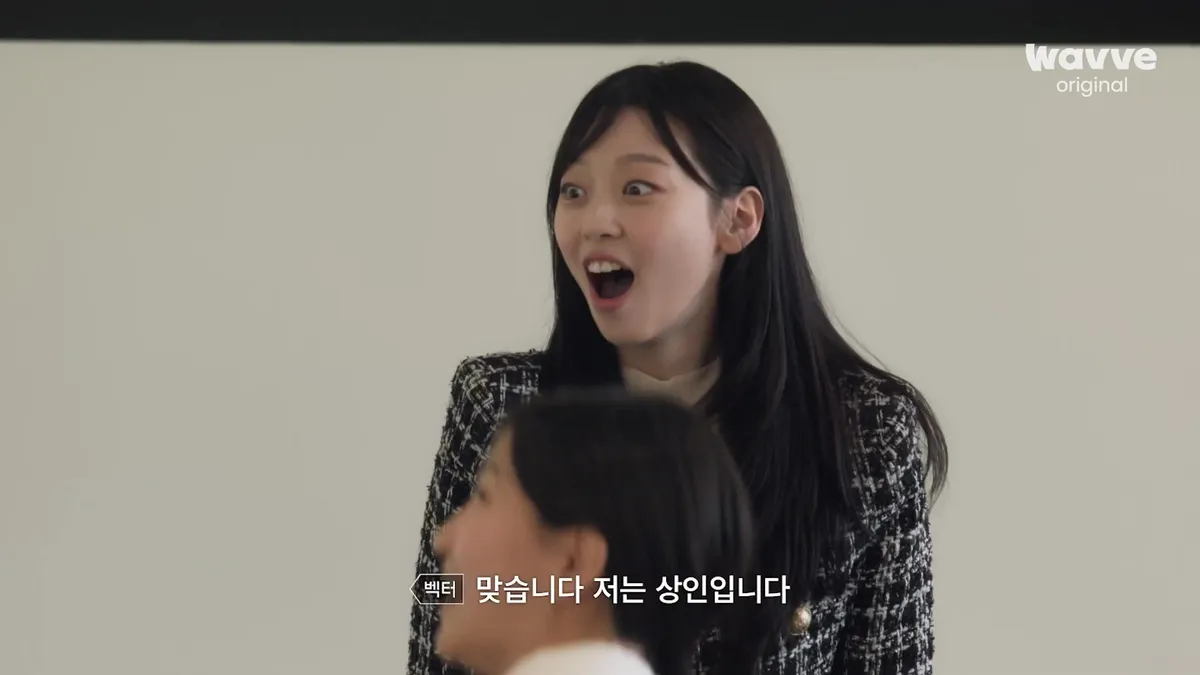
From consultants to reporters: a diverse cast of participants
This season brings together individuals from a wide array of professional backgrounds. YouTuber Park Se-seung, a former management strategy consultant, expressed a fierce will to survive, stating, "I must take first place no matter what." Gender equality activist Kim Nam-gil acknowledged that his professional background might cause resentment in others, yet expressed a positive outlook on the forced social environment.
Lee Hyun-sun, who works in the explosive ordnance disposal unit at Korea Airports Corporation, uses the nickname 'Boss' and revealed values that prioritize honor. 14-year veteran reporter Shin Hae-won foreshadowed a perspective distinct from the previous season's value-centered approach by noting the interest-driven nature of real-world politics. Other participants preparing their strategies include board game writer Kim Keon Hee, dancer Knox, Giseon and Hamlet (named after literary characters), and Paul (carrying religious significance). One resident, choosing the nickname 'Luna,' expressed a desire to influence others as gently as moonlight.
"War is inevitable": the prelude to survival conflicts
In the early stages, tension rose as residents presented conflicting opinions on rules and survival methods. The footage foreshadows conflicts over food price hikes, inflation, and resource distribution. Some cast members even suggested extreme measures, stating, "Symbiosis is impossible with these numbers," and "We must survive even if we have to start a war." This sparked further debate over fairness, with some arguing, "The moment you go to war, there is no fairness."
The testing process also highlighted philosophical debates regarding whether individuals or groups should endure losses for the public interest. For instance, when asked if one should report corporate corruption that violates public interest even if innocent people lose their jobs, some argued that reporting is necessary because societal irrationalities must be replaced, even if jobs are lost in the process. The core appeal of the show lies in seeing how residents with conflicting value codes negotiate and find balance within a single space.




Comments 0