
"夫婦有別 is Not Discrimination"... 19 Historical Errors We Have Been Misunderstanding
Historical facts regarding Confucian virtues like '長幼有序' and '夫婦有別' are being re-examined to correct common misconceptions. The report also clarifies historical controversies regarding the Six Martyred Ministers, the lyrics of "Dokdo Is Our Land," and the professional specialties of famous figures like Heo Jun.
Historical facts regarding '長幼有序' and '夫婦有別', known as core virtues of Confucianism, which have been misunderstood in modern society, have been revealed. According to a video from the Diggle channel, terms that were previously regarded as grounds for social order or gender discrimination actually contained different meanings.
'長幼有序' Distinguished by '學列' Rather Than Age, and '夫婦有別' Recognizing Differences
While '長幼有序' is often easily understood as an emphasis on order between elders and children based on age, the explanations from experts in Oriental studies are different. According to the expert in the video, the standard for elders and children in Confucianism is not simple age, but '學列'. It is said that '學列' refers to academic achievement or hierarchy within kinship relations, serving as an ethical concept that deals with order within a family. This serves as the basis for explaining historical cases where friendship was maintained even despite large age differences.
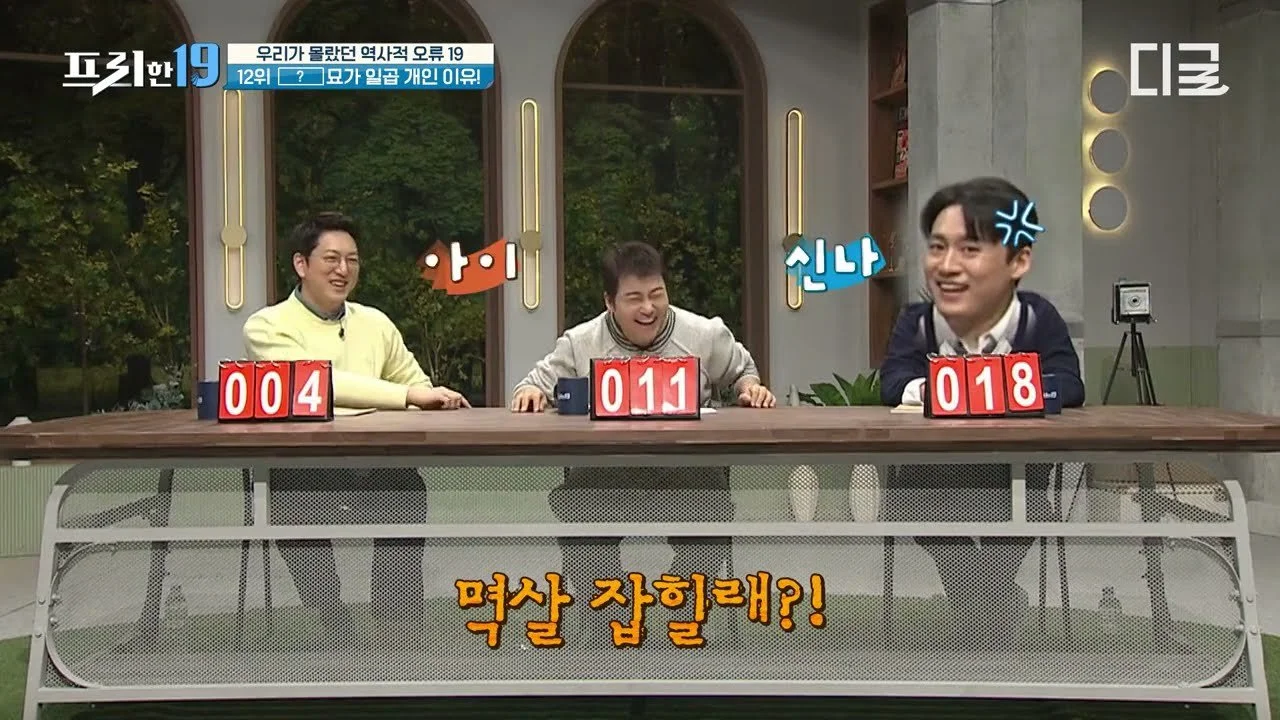
'夫婦有別', which has been misunderstood as a symbol of gender discrimination, is also interpreted as a concept of recognizing differences. The video specified that 夫婦有別 has a different meaning from 'Male Superiority and Female Inferiority', which claims men are high and women are low. It carries the meaning that the husband fulfills his duty through firmness and the wife through softness, following the laws of nature and behaving so as not to invade each other's domains. In short, the core is recognizing 'differences' rather than discrimination based on gender.
The Truth of the 四六臣 and Changes in the Lyrics of "Dokdo Is Our Land"
Controversies related to historical figures were also addressed. In the case of the '四六臣', known as the loyal subjects of Danjong, a controversy regarding the 'Seven Martyred Ministers' arose in 1977 when an argument was raised that 金文祺 should be included. According to the Annals of King Sejo, there is a record that 金文祺 was responsible for important military mobilization at the time and was executed along with the 四六臣. Regarding this, the National Institute of Korean History announced 金文祺 as one of the 四六臣 in 1977 and enshrined his tomb together, but the controversy continues as they later issued a correction in 1982 stating they had never changed the list of the 四六臣.
It was also confirmed that the lyrics of the national song "Dokdo Is Our Land" were modified according to changes in the times. The original song released in 1982 was rewritten to reflect changes in the administrative district name of Dokdo and updates in meteorological information. In particular, the lyrics previously known as 'Geographical Treatise of the Annals of King Sejong, page 50, third line' were found upon checking actual records to have a clear mention in 'Geographical Treatise of the Annals of King Sejong, Volume 153, Gangwon-do Uljin-hyeon section', and it is now guided that it should be accurately called 'Gangwon-do Uljin-hyeon'.
The Status of On Dal the Fool and Why Heo Jun Was Not a Master of Acupuncture
A new interpretation was also presented regarding why General On Dal of Goguryeo was called a 'fool'. Since it was nearly impossible for a commoner to become the king's son-in-law in the highly stratified society of Goguryeo, it is estimated that On Dal must have been at least a lower-ranking noble capable of marrying into the royal family. The title 'fool' may have been an expression used by traditional nobles who despised the emerging nobles of that time, or there is a possibility that the meaning of the Chinese character '愚' included the sense of being 'stubborn', causing misunderstanding during the translation process.
It also draws attention that Heo Jun, known as the greatest physician of Joseon, was actually not an acupuncture expert. While the image of Heo Jun curing patients with needles was imprinted through dramas and novels, according to the records of the Annals of the Joseon Dynasty, Heo Jun stated that he could not personally administer acupuncture during the treatment of Seonjo's migraines. Joseon's medicine was systematically divided into 'Yak-ui' (medicine doctors) who used medicine and 'Chim-ui' (acupuncture doctors) who used needles, and it is reported that Heo Jun was an internal medicine doctor who handled medicine, while the unrivaled master of acupuncture was 許任.
Meanwhile, the meaning of 'Baekjeong', a class that was looked down upon during the Joseon Dynasty, was also re-examined. In the Goryeo Dynasty, Baekjeong was a broad concept meaning 'general farmers' who were assigned no official position by the state. However, it was explained that during the reign of King Sejong in Joseon, as he ordered the nomadic-descended 'Hwacheok' to be called general Baekjeong, the historical background was such that the meaning of the term narrowed as the existing farmers (Baekjeong) and the discriminated Hwacheok were grouped under the same name.
Han Ah-reum reports for NBNTV Global, mainly covering K-Variety and also writing on K-pop and K-drama.
Related Articles
Lee Yong-ju Mentions Editing Differences Between 'Bicycle Gopchang' vs. 'Recruiting Singers' Before 900,000 Subscribers

Actor Kang Hong-seok's First Vlog: 8kg Weight Loss and Vocal Care Routine Behind the Scenes of Musical 'Elisabeth'
Comments 0