
"Attacked by magpies and observing penguin parenting"... The reality faced by basic science researchers
Dr. Lee Won-young, a researcher at the Korea Polar Research Institute, shares the struggles of a basic science researcher, including being attacked by magpies and observing the unique parenting behaviors of penguins in Antarctica.
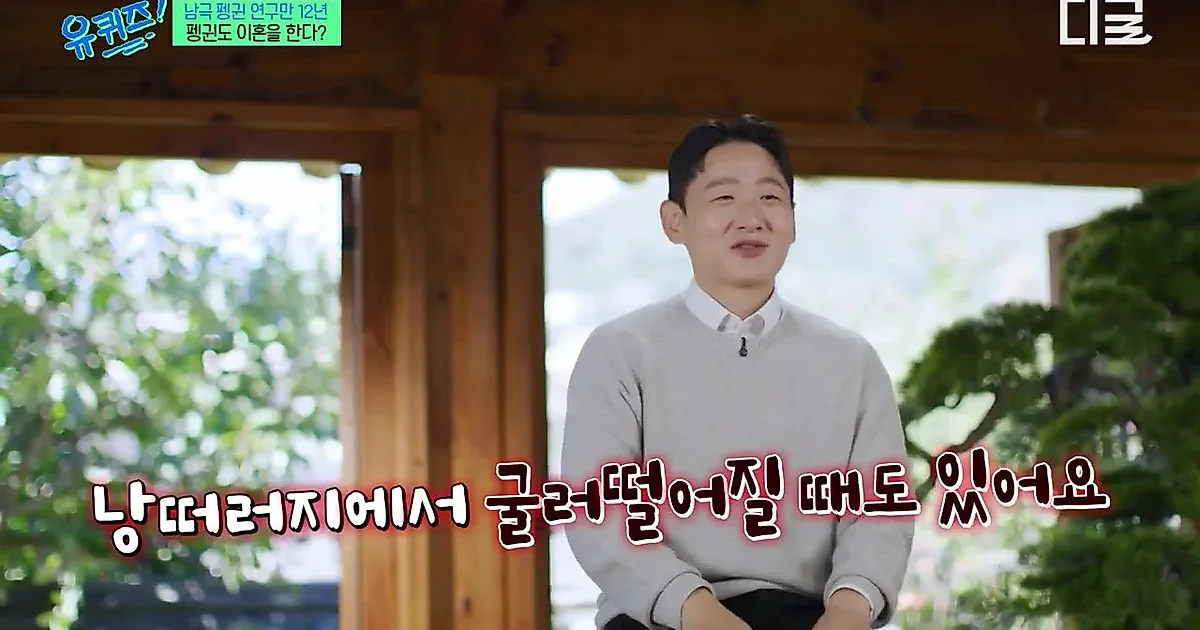
A story has been shared regarding the reality faced by basic science researchers in South Korea and the agony involved in that process. Dr. Lee Won-young, who studies animal behavior at the Korea Polar Research Institute, recently spoke candidly through a broadcast about the anecdotes experienced while researching magpies and penguins, and her life as a researcher of basic sciences.
The arduous academic journey of the 'magpie doctor' who protected magpie nests
Dr. Lee Won-young is a student of Professor Choe Jae-chun, an authority in the natural sciences field. After entering the Department of Biological Sciences at Seoul National University, she joined Professor Choe's research team and devoted herself to magpie research for over six years. During her master's and doctoral programs, while climbing up and down magpie nests to observe parenting behavior, she was even recognized as a 'predator' by the magpies and attacked. According to the explanation in the video, even if Dr. Lee merely passed near a nest, the magpies showed a selective response by targeting specific researchers, such as appearing and hitting the back of her head.
The reality she faced after obtaining her degree was not easy. Dr. Lee confessed that she experienced difficulties while job hunting for about three months after becoming a doctor. She revealed her honest feelings at the time, stating, "There wasn't much place to apply what a magpie doctor knows, and there was nowhere to go," noting that she even thought of companies like Samsung Electronics or SK hynix. Later, upon hearing news from the Korea Polar Research Institute looking for a penguin researcher, she continued her research based on the physical similarities between magpies and penguins.
Penguin 'divorce' and parenting resembling humans observed in Antarctica
Dr. Lee shared ecological characteristics she discovered while researching penguins in the extreme environment of Antarctica. She noted that the parenting methods of penguins resemble the image of human parents. She mentioned that the process where parent penguins take turns going out to sea to find food while the chicks wait in the nest, suffering hardships such as bleeding or breaking legs while climbing rugged terrain, is no different from human parenting.
Furthermore, she shared interesting facts about penguin reproduction and relationships. According to Dr. Lee, even among some penguins that maintain monogamy, there are cases of 'divorce' where the mate changes the following year. In particular, she explained that in the case of Emperor penguins, while the monogamy maintenance rate reaches about 90%, the probability of the mate changing the next year increases if the breeding success rate was low. On the other hand, she added that there are species, such as the wandering albatross, that decide on a lifelong mate after observing a partner for several years.
"What if there is no place looking for me"... The weight of basic science
Despite achieving academic achievements such as publishing papers in the journal Science, the realistic rewards felt by basic science researchers were minimal. Dr. Lee mentioned the reality where one actually has to pay costs when publishing a paper, and explained the process of having to directly apply for scholarships to receive research funding. Comparing herself to her colleagues who entered the medical field, she confessed, "There was an anxiety of what I would do if there was no place looking for me."
When she was isolated in Antarctica due to bad weather, she thought, "We are in the same space, but living in different worlds," while watching a cruise ship passing by in the distance, and emphasized the importance of ecological observation where data is collected directly in the field. Dr. Lee emphasized the value of basic science research, stating, "The most fundamental field observation data is accumulated only when ecologists roam the field and bring it back."
Han Ah-reum reports for NBNTV Global, mainly covering K-Variety and also writing on K-pop and K-drama.
Related Articles
"An Octopus with Nine Selves"... The Bizarre Appearance of Deep-Sea Creatures and the Secrets of Neuroscience

LilyPichu visits Open Sauce... Participating in Battlebot and panels with Michael Reeves

Comments 0