
"An Octopus with Nine Selves"... The Bizarre Appearance of Deep-Sea Creatures and the Secrets of Neuroscience
A discussion explores the essence of the "self" through the extreme biological adaptations of deep-sea creatures and the unique nervous system of the octopus. The conversation covers everything from the physical difficulties of deep-sea exploration to philosophical questions regarding consciousness and the soul.
A conversation was held to explore the essence of the "self" through the forms of life created by the extreme environments of the deep sea and the unique nervous system structure of the octopus. The video covered a wide range of topics, from the physical reasons why deep-sea exploration is difficult to the biological characteristics of the octopus and the philosophical questions that expand from them.
Survival strategies to withstand deep-sea pressure: 'Adaptation', not 'Bizarreness'
The fundamental reason why deep-sea exploration is difficult lies in the immense water pressure. While outer space is an environment where internal pressure must be endured, the deep ocean is an environment where one must withstand the pressure pushing in from the outside. As the depth increases, the pressure rises sharply to tens or even thousands of atmospheres, posing a significant threat to both exploration equipment and living organisms.
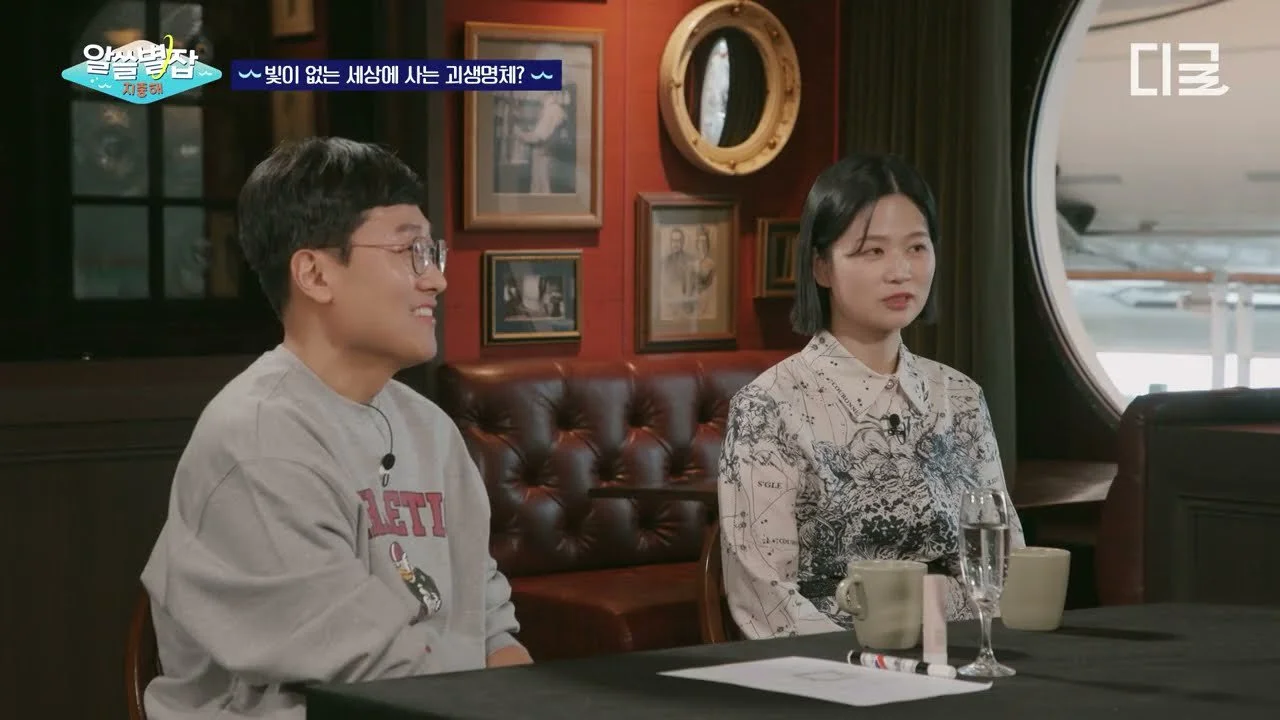
The reason deep-sea creatures appear bizarre to human eyes is that they have evolved into forms optimized for the environment they inhabit. In dark environments where almost no light enters, there is no need to rely on vision, so the structure of their eyes differs from that of typical organisms. Furthermore, to withstand strong pressure, rather than making their bodies rigid structures, they take forms that disperse pressure, such as having holes or being primarily skeletal. These unique forms even serve as motifs for monster designs in science fiction movies.
The octopus's 'local autonomy' nervous system... A living being with nine selves
The octopus is an animal with a very peculiar structure from a neuroscientific perspective. An octopus has about 500 million brain cells (neurons), and the surprising fact is that more than 60% of these are distributed in its eight arms rather than in its head. The arms of an octopus have a 'local autonomy' type of nervous system, where they judge and move independently without waiting for instructions from the head.
The arms of an octopus have 'papillary' structures that act as sensors capable of detecting light, taste, and touch, enabling independent behavior. If interpreted from a human perspective, an octopus can be seen as a being with 'nine selves' when combining the brain in the head and the brains in the eight arms. The fact that instructions from the head and movements occurring in the arms may not perfectly coincide demonstrates the unique biological structure of the octopus.
Between scientific facts and human beliefs: Reflections on 'Self' and 'Soul'
The unique neural structure of the octopus leads to the philosophical question, "What is the self?" Humans integrate different sensory information such as vision, hearing, and taste into one in the brain to perceive a 'single self,' but the case of the octopus suggests that the concept of the self can exist differently depending on biological structure. The hypothesis that atomic-level reactions in the physical world manifest as 'consciousness' through a highly abstract process also mentions the possibility of the separation of body and mind.
Within these scientific discussions, a conversation about the existence of the soul also continued. Although there is no scientific evidence to prove the existence of a soul, it was emphasized that for humans, 'belief'—the act of sharing emotions like love and assigning meaning to all things in the world—is an important element that makes life warm. The perspective was presented that knowing the truth and having a warm heart are separate issues, and that humans still require emotional exchange and belief.
Han Ah-reum reports for NBNTV Global, mainly covering K-Variety and also writing on K-pop and K-drama.
Related Articles
LilyPichu visits Open Sauce... Participating in Battlebot and panels with Michael Reeves

"A colleague died while clearing a water deer"... Inspector Jang Seung-gu reveals painful memories and the reality of the 112 situation room

Comments 0