“It Was Just a Joke”: Remorseless Attacker Leaves a Victim’s Family in Hell
In “Beautiful World,” Seon-ho lies critically injured as student attackers coordinate lies and adults choose silence.
School violence escalates beyond bullying into a tragedy that destroys an entire family. The drama “Beautiful World” heightens its tension by intertwining the coldhearted behavior of the students who attacked their classmate with the actions of adults seeking to conceal what happened. Even as the victim remains between life and death after falling from a rooftop, the perpetrators are preoccupied with hiding their wrongdoing behind a single word: “joke.”
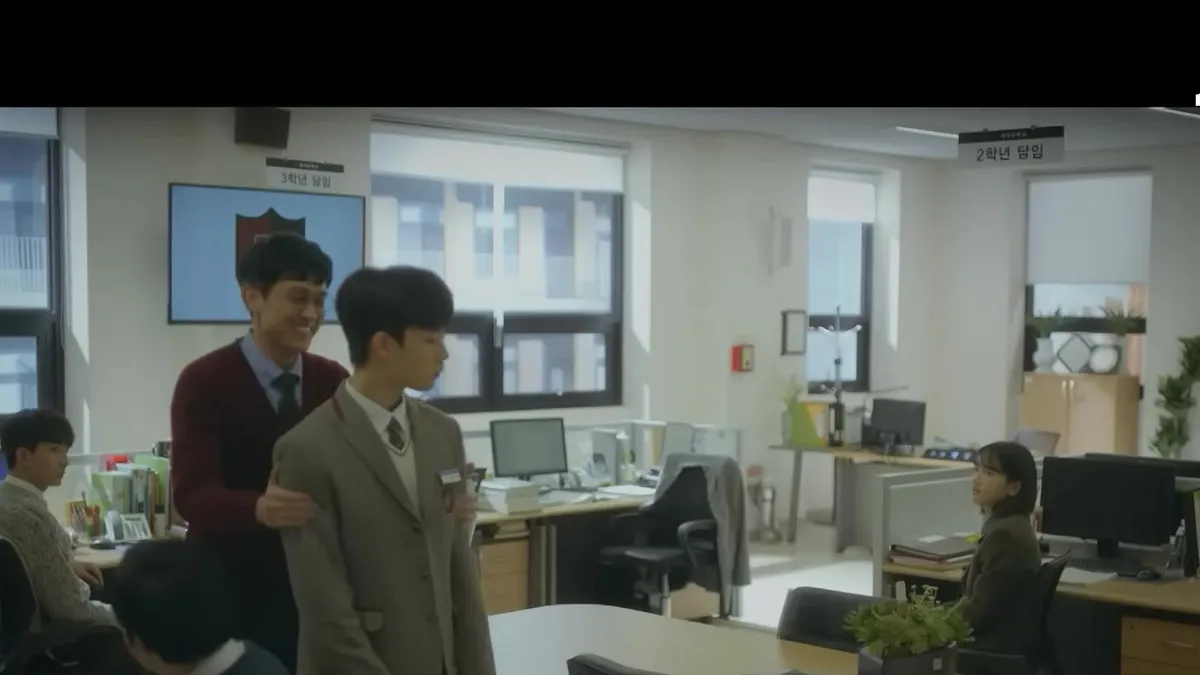
“It Was a Joke”: A Perpetrator’s Shamelessness and the Reversal of the Truth
At the center of the case is Yeong-cheol, one of the students responsible for the violence. Seon-ho, the student who was victimized, has fallen from a rooftop and remains unconscious. Despite the gravity of Seon-ho’s condition, Yeong-cheol continues to justify his own actions instead of confronting the harm for which he is responsible.
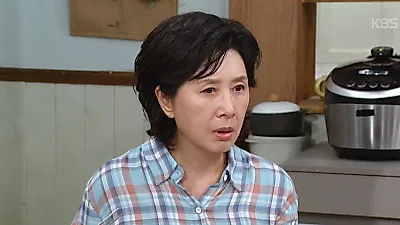
Yeong-cheol’s mother is horrified when she witnesses the truth about her son’s involvement in the school violence. She asks him, “Are you crazy?” Yet Yeong-cheol answers that they were “just fooling around,” showing not even the slightest sign of guilt while Seon-ho remains critically injured.
His reaction stands in stark contrast to the desperate reality facing Seon-ho’s parents. One family is watching its child’s life collapse, while the student involved in causing that suffering dismisses his conduct as nothing more than a joke. That contrast between the victim’s devastation and the perpetrator’s lack of remorse is designed to provoke viewers’ anger.
An even more serious problem is the coordinated attempt by the students involved to cover up the truth. Jun-seok is portrayed as the group’s de facto ringleader. Although he avoids directly taking part in the physical violence, he manipulates the other students from behind the scenes and is depicted as the person who planned the incident.
Before the students are interviewed by police, Jun-seok tells the others, “We need to get our stories straight.” His instruction makes clear that their response will not be a collection of spontaneous individual accounts. They intend to coordinate what they say and present a shared version of events that protects them from responsibility.
The students also exploit the fact that they were once friends with Seon-ho. They use that former friendship as material for a carefully prepared lie, hoping to blur the essential nature of the incident and avoid accountability. Their aim is to replace the reality of violence with a narrative convincing enough to conceal each student’s role.
Silent Adults and Increasingly Calculated False Statements
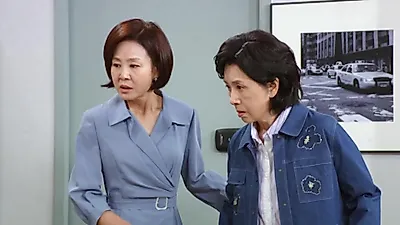
The effort to hide the incident extends from the students to their parents. After Yeong-cheol’s mother learns of her son’s wrongdoing, she faces a choice between revealing the truth and protecting him. She ultimately chooses to shield her son rather than disclose what she knows.
Yeong-cheol sends his mother a text message asking her to “pretend not to know.” When she later comes face to face with Seon-ho’s parents, she remains silent. Her refusal to speak deepens the tragedy and shows how a perpetrator’s family can become a barrier preventing the victim’s family from reaching the truth.
Once the police interviews begin, the students’ false accounts become increasingly sophisticated. They recast the suffering Seon-ho experienced as a personal problem, suggesting that factors such as academic stress were responsible. By doing so, they distort the cause of the incident and divert attention away from the school violence.
Jun-seok is especially calculated in answering the detective’s questions. He claims that Seon-ho was merely upset because Seon-ho had played a harsh joke on Yeong-cheol. With that statement, Jun-seok erases his own leading role and subtly rearranges the situation so that the perpetrators’ responsibility disappears from the account.
The students’ lies have been constructed carefully enough to deceive even the detective. Their coordination suggests that school violence may involve more than the misconduct of isolated individuals: it can also be accompanied by a structured, collective effort to suppress the truth. The students align their statements, redirect attention toward Seon-ho’s personal circumstances and rely on silence from adults who know more than they admit.
Seon-ho is now in critical condition because of brain damage. The possibility that he could remain in a vegetative state or die has been raised, leaving his life and future in grave danger. His family must confront that devastating reality while those connected to the violence continue to protect themselves through coordinated falsehoods and silence.
With the victim’s life shattered and his family pushed into despair, the drama moves forward with mounting urgency. The central question is what outcome awaits the perpetrators’ organized lies and the parents who chose silence, as the truth of Seon-ho’s fall remains obstructed by both students and adults.
Related articles