Jeong-yun Asks, “Father Knew Everything, Didn’t He?”—The Unexpected Question That Shakes Yoon Da-hun
Jeong-yun’s pointed question unsettles Yoon Da-hun as a hidden truth threatens trust and family ties in Gippeun Uri Joeun Nal.
Hidden truths are beginning to surface in Gippeun Uri Joeun Nal, a drama centered on complex emotions within a family and the ways relationships change as those emotions come to light. The characters’ connections are no longer defined only by what they openly share. What some of them know, what others have overlooked, and what may have been deliberately left unspoken are becoming increasingly important to the story.
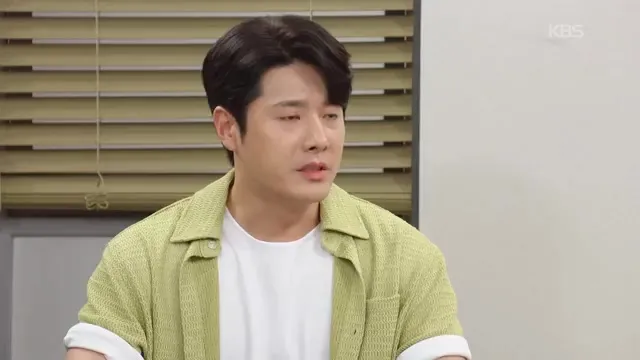
A recently released scene brings that tension into sharp focus. Jeong-yun directs a pointed question at Yoon Da-hun, and the exchange emerges as an important turning point capable of changing the direction of the drama. Rather than merely advancing the conversation between the two characters, the question draws viewers’ attention to the possibility that the truth is distributed unevenly between them.
Jeong-yun’s question throws Yoon Da-hun into confusion
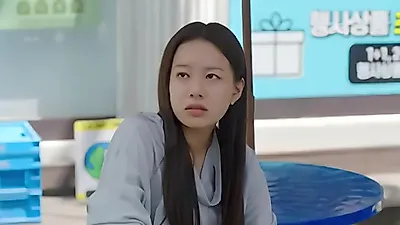
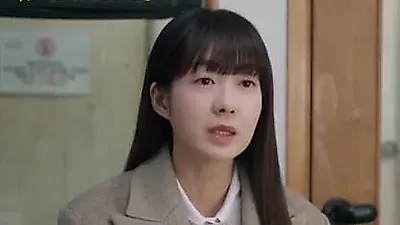
When Jeong-yun comes face-to-face with Yoon Da-hun, she asks him, “Father knew everything, didn’t he?” The wording is brief, but its implications extend far beyond a simple request to confirm whether something is true. By framing the question as something Yoon Da-hun’s father already knew, Jeong-yun suggests that knowledge of the hidden matter may have existed within the family before this confrontation.
The moment can also be read as an indication that Jeong-yun has already grasped a secret that Yoon Da-hun himself either did not recognize or had chosen not to confront. Her question therefore places him in an unsettling position. He is not merely being asked to provide information; he is being confronted with the possibility that Jeong-yun understands something about his circumstances that remains unclear even to him.
That imbalance becomes even more pronounced when Jeong-yun demands to be told the secret that Yoon Da-hun alone does not know. The situation sharply exposes the power structure between them. Jeong-yun holds enough information to identify the existence of a concealed truth, while Yoon Da-hun is left trying to understand what others may already know about his own life and family.
The exchange illustrates how knowledge itself can shift the balance within a relationship. Yoon Da-hun may appear to be the person most directly connected to the secret, yet that closeness does not give him control. Jeong-yun’s awareness allows her to lead the confrontation, while his lack of information leaves him unable to respond from an equal position.
This pattern of dialogue also reveals the conflict that inevitably arises as the drama’s characters struggle to become the central figures in their own lives. Each of them wants to understand and direct their own story, but their efforts collide when another person possesses crucial information. The scene shows how difficult it is to remain in control when the truth on which that control depends is being held elsewhere.
Even a character who appears flawless can become powerless when faced with information controlled by someone else. That vulnerability is emphasized through Yoon Da-hun’s confusion. Whatever confidence or understanding he previously relied upon is challenged by a question that implies his view of the people closest to him may be incomplete.
Jeong-yun’s incisive question is therefore likely to create a crack in the worldview Yoon Da-hun has built. The scene does not reveal the full truth behind her words, but it makes clear that his existing assumptions can no longer remain untouched. Once the possibility of a concealed secret has been raised so directly, neither the conversation nor the relationship between the two can simply return to its earlier state.
The weight of a secret in a family drama
Gippeun Uri Joeun Nal presents itself as a romance and family drama shaped by multiple generations. Within that framework, a secret shared or concealed inside the boundaries of a family is more than a piece of information waiting to be disclosed. It becomes a force that can determine how the characters trust one another and how strongly their emotional bonds can endure.
A revelation inside a family can alter the meaning of earlier relationships, particularly when some people appear to have known the truth while another person remained unaware. Jeong-yun’s question brings that possibility to the foreground. Her doubt carries enough weight to shake both Yoon Da-hun’s sense of identity and the foundation of the family relationships to which he belongs.
The issue is therefore not limited to whether Yoon Da-hun can discover the answer. The deeper tension lies in what the existence of the secret says about the family itself. If his father knew everything, the question of why Yoon Da-hun did not know becomes inseparable from questions of trust, silence, and the bonds connecting the family’s members.
The drama’s tension is heightened as characters who seem like the most perfect people in the world become entangled with others who display an unexpected clumsy side. Their relationships unfold with the intensity of a life-or-death struggle, and the presence of a hidden truth deepens that sense of confrontation. The secret raises the stakes because it has the potential to change not only what one character knows, but also how every involved character understands the others.
Following Jeong-yun’s question, Yoon Da-hun’s next response will be crucial. Whether he confronts the implication, retreats from it, or begins searching for the truth will shape the direction of the coming story. His attitude matters because the question has already disturbed the balance between knowledge and ignorance that existed before their encounter.
The other major point to watch is how the truth Yoon Da-hun did not know will affect the entire family. A secret with the power to unsettle his identity may also send repercussions through every relationship built around him. The drama’s next developments are expected to hinge on both the nature of that truth and the consequences that follow once it can no longer remain beneath the surface.
Related articles