“Am I Not Grandpa’s Grandson?” Yoon Ha-bin’s Sudden Question Shakes the Family Before Dawn
Yoon Ha-bin jolts his family awake before dawn with a startling question that hints at deeper tensions in KBS drama Love Is Coming.
The unexpected moments confronting people brought together under the name of family are deepening viewers’ immersion in the drama. KBS series Love Is Coming follows a man and a woman who gather the fragments of a broken family and turn them into a warm, sustaining feast of life. Through that story, the drama has been delivering an emotional resonance centered on family relationships, their fractures and the possibility of bringing them back together.
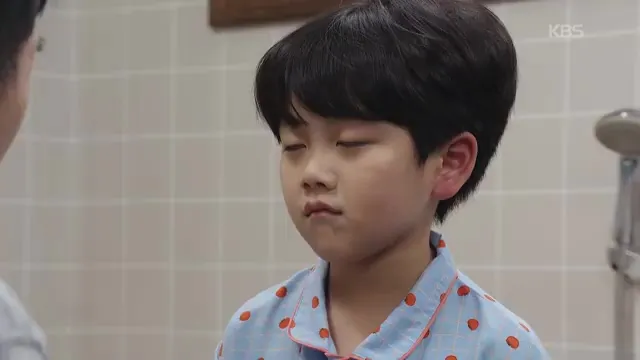
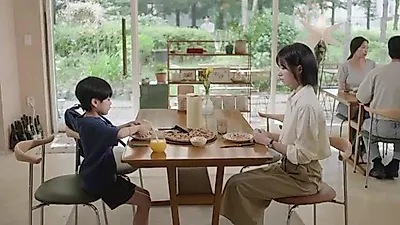
A recently released video captures one such unforeseen moment. Yoon Ha-bin, a character in the drama, wakes the entire family before dawn with a sudden question. “Am I not Grandpa’s grandson?” he asks, abruptly disrupting what had been a peaceful family morning. The question is unexpected and unusual, yet Yoon Ha-bin delivers it with unmistakable seriousness.
His words leave the other family members bewildered. At the same time, the exchange introduces a fresh measure of tension and amusement into the story. The scene draws its impact from the contrast between the quiet of the early hour and the weight of the question that breaks it, turning an ordinary family morning into a moment charged with uncertainty.
Yoon Ha-bin’s sudden remark before dawn—and the family’s response
Yoon Ha-bin’s question can be read as more than a simple incident played for surprise. It also works as a narrative device that suggests the complexity of the family’s relationships. By arriving in the stillness before dawn, his words appear to touch on the questions or early signs of conflict that individual family members may already carry concerning their relationships with one another.
The family members are caught off guard by the abrupt question and respond in different ways. Those varied reactions give the scene more than one emotional dimension and help present the circumstances facing the drama’s characters from multiple angles. Their confusion, and the differences in how each person handles the moment, bring the tangled nature of the relationships into clearer view without immediately resolving what the question may mean for the family.
The timing is also central to the scene’s effect. Before the household has properly begun its day, Yoon Ha-bin forces everyone to confront a question about his place within the family. The calm of dawn is broken not by a major external event, but by a direct and serious remark from within the family itself. That disruption adds momentum to the drama while preserving the mixture of warmth, tension and humor that surrounds the characters’ shared life.
A family’s path toward recovery, portrayed through a “family recipe”
Love Is Coming does not stop at depicting conflict. Using the idea of a “family recipe,” the drama also portrays the process of repairing relationships. The story led by Ha Seok-jin and Ahn Hee-yeon asks how relationships that have been broken can be joined together again. Its focus is therefore not only on the existence of fractures, but also on what it takes for people to gather those pieces and begin rebuilding a family life.
Moments of unexpected rupture, including Yoon Ha-bin’s question, accumulate within that larger structure. Each disturbance exposes another part of the family’s complicated situation, but these moments ultimately move the story toward the creation of a warm feast of life. The drama connects the language of food and the image of a shared table with the work of restoring relationships, allowing its “family recipe” theme to carry both the characters’ conflicts and their hopes for recovery.
That approach gives the pre-dawn scene a place within the drama’s broader emotional direction. Yoon Ha-bin’s question shakes the family’s immediate peace, but it also becomes one of the moments through which the characters’ bonds can be examined. The uncertainty caused by the remark is part of the same process that asks whether damaged relationships can be pieced together and transformed into something warm again.
The production is further shaped by the distinctive performances of its cast, including Ha Seok-jin, Ahn Hee-yeon, Park Yoo-na and Bae Jeong-nam. Through its ensemble of characters, the drama explores the dual nature of family ties: they can offer warmth and connection, while also carrying confusion, tension and unresolved questions. The differing responses to Yoon Ha-bin’s remark illustrate that duality in a single morning scene.
Attention now turns to where the morning that began with this unexpected question will lead and what kind of table ultimately awaits the family. Viewers are also watching to see how the warm “taste” of life portrayed by the drama will be conveyed as its characters continue confronting fractures, responding to one another and working toward the restoration of their relationships.
Related articles